Sunday, 6 April 2014

Yella

Although my Arabic is unspeakably bad, I am fortunate enough to have a few words which are so laden with meaning that I can use them about 20 times a day. One of these words is 'Yella'. Yella means many things: 1) With a questioning tone it can mean 'shall we leave?' 2) Once the decision to leave has been discussed, and movements in preparation to depart have been made, repeating the word with a questioning tone once more can mean 'are you ready to go?' 3) When uttered decisively it means 'Let's go,' with no allowance for discussion about the possibility or time of departure 4) When uttered decisively and aggressively it can mean 'hurry up!'  5) When uttered by a person cooking it means 'food's ready, come get it.' 6) When yelled during a football match it means 'pass me the ball' or sometimes merely 'shift the ball in the direction of our goal' or, if even that is an impossibility, 'kick the ball before the other person kicks the ball.' 7) When uttered decisively and aggressively with a hint of threat it can mean 'get lost.'  8) When mumbled by a boxer during a fight it means 'come on, take your best shot.'  Of course, there is the possibility that I just make the word mean whatever I want because I don't know many other words. Mumkin. Over the past month I have had a few opportunities to yella on out of Nablus and visit some other locations in the West Bank. Here are a few of them.      

On paper, it doesn't look too far from Nablus to Jerusalem. However, maps don't take into account the Palestinian bus system, West Bank traffic, checkpoints, and the Hunger Games esque situation that is boarding a bus in this country. Add to that getting lost after another perplexing failure of relying on printed maps from Google to get me from A to B, and you can find yourself with quite a long and arduous journey on your hands. This allowed me plenty of time for reflection though, and I couldn't help but hark back to my days of reading Maus when, while waiting in line at a checkpoint, our queue was kept entertained by an ongoing battle between a cat and a mouse. By the time my turn had come, the mouse had managed to wedge itself between a pillar, temporarily protected from the cat, but completely incapable of escape. All that was now needed was for a dog to enter and initiate fruitless dialogues with each party. How insightful Art Spiegelman had been with his use of masks to represent the position of his characters, and how those positions have reversed over the last fifty years.

Despite the obstacles, I managed to arrive and spend a weekend in Jerusalem, meeting up with some wonderful New Zealanders. It was like reacquainting myself with the West, Jerusalem being a hustling and bustling Western styled city, complete with inner city trams, bustling streets and large hotels. It was a stunning city, as uneasy as I may have sometimes felt. Over the course of the weekend we managed to tick a few items off the tourist checklist. Visiting the City of David was especially worthwhile; not only does one get to see a historic biblical city and walk through an incredibly old and interesting underground tunnel, one also gets to participate in the wonderful fusion of western tourism and Zionist propaganda that is such a big part of a visit to Old Jerusalem. I also saw Bethlehem for the first time, and was sure to visit the Church of Nativity. By far, the highlight of Bethlehem was the bizarre sight of priests barging their way through tourists, entering a large room in the west side of the church, and aggressively demanding (see above, yella, definition 7) everyone to 'get out now!' multiple times before proceeding to pray. I like to think God was as perplexed at this as I was. I also got to touch the sacred sight where Jesus is thought to have been born (or at least some group in the past decided it was as good a place as any) and discovered that I don't know how to behave around relics. I have no photos because my camera ran out of battery, but I was there.

A completely different trip altogether was a recent trip into the Jordan Valley, into a small village. As I may have mentioned in a previous post, the Jordan Valley is part of Area C, and faces severe difficulties under the occupation. I cannot do justice to them here, but will try to discuss them in my next post. It is an incredibly beautiful place, and I was surprised by the extent it re-energized me getting out of the city and into the countryside. We spent our time learning about the difficult situation there, building bricks out of dirt and water, and gazing at the scenery.


Searching for water. Most of it has gone to the neighbouring settlers.

Some local terrorists take a break to tend their sheep.


Making bricks.

Only able to stay for a couple of days, myself and another volunteer decided we would then hitchhike home, anticipating some sort of adventure along the way. We were not disappointed. Not needing to wait long at all, the first person to pick us up was an extremely kind man from Tubas, who not only gave us a ride half the way, but shouted us all orange drinks while on the road. The second pick up was going fine until we ran into heavy traffic. Inquiring what was going on, and discovering that there were police down the road checking cars, our host quickly changed lanes and proceeded to reverse at 50km/h amidst the freely flowing traffic going the opposite direction for a good kilometer or so. It was a strange sensation. About five minutes into this quick getaway the driver decided he was safe to stop. We were then told to yella, which we were happy to do, and we began the search for the final vehicle to take us home.

This week, I had the opportunity to go to Askar camp, an old Palestinian refugee camp which resulted from the 1948 war, where some locals and volunteers were doing some art work on the walls around the street. I was able to practice my Arabic, explaining that I was unable to draw or paint, but lacked the Arabic to rehash the story of being 13 years old and having my art teacher hold my work up in front of the class and announce it as a benchmark for the level she expected all students to be above. The people of Askar camp were incredibly kind, not just to us but to each other, and it was neat to witness the community centered atmosphere of the neighborhood we were working/hanging out in.        

Andre in action. The key represents the keys to the homes lost by the Askar refugees of 1948. Many living in Askar have grandparents that were driven from their homes in places such as Haifa.


An (intentional?) reference to Nixon.

I drew two or three of those stars on the right.

Although I've promised to write more about Area C next post, this article really sums up the level of bullshit that continues to go on in politics here:
http://www.independent.co.uk/voices/comment/robert-fisk-any-other-statesman-who-negotiated-peace-like-john-kerry-would-be-treated-as-a-thief-8760028.html

(and I don't swear when writing posts my parents will read unless I really mean it). 

Saturday, 29 March 2014

Into routine

It's been three weeks since my shock re-entry into the holy land, and I've fallen into a kind of routine here. Frustrated with my slow progress in speaking Arabic, I've started taking 2 hour classes each morning. I can now read the Arabic script, albeit slowly and awkwardly, and I've started building my vocab, associating various Arabic words with similar sounding English phrases. For example, orange (the fruit) in Arabic is 'burtoqal'.  To remember this word I combine the fine acting of Burt Reynolds with the word protocol, creating some kind of strange Burt Reynold's esque procedure. Burtoqal. Without the use of these quirky linguistic associations I have no hope of remembering anything. On top of these Arabic classes I am also taking English conversation classes at the university a few times a week, which, as the name suggests, merely involves initiating conversations in English to allow students to practice their speaking. I am getting better and better at sustaining conversations about just about anything over long periods of time, sometimes serious, sometimes as inane as a Seinfeld episode. 

Aside from the university I also teach an English class for beginner adults. We have been meeting for a while, and they are an enjoyable bunch to teach. The highlight so far has certainly been one student who managed to full asleep halfway through writing a word, sitting upright, pen still on paper, for a good 20 minutes. I have also just started teaching some guitar classes in return for oud lessons. My natural instinct when playing the oud is to play it like a guitar, and it has been difficult to make the technical shift to oud. In fact, I still play the damn thing like a guitar, but my teacher is very patient with me. Finally, there was some discussion of me taking a group of teenagers in a refugee camp and preparing them for a trip to a United Nations youth convention in Geneva in June, but as of yet I am yet to hear of anything being organised, and so am yet to hold any classes. Don't get me started on the lack of organisation and structure that tends to dominate the culture.   

If the above sounds relatively uneventful, it is because it is. Nablus is in Area A. Area A is under full Palestinian control, and applies to the main cities and towns around the West Bank (which actually ends up only being about 3% of the West Bank). Nablus tends to carry on with few obvious signs of occupation, the exceptions being should you travel to a neighbouring village and have to pass through an Israeli checkpoint, or if the IDF decide to conduct a raid for security reasons. Balata camp, the most dense refugee camp within Nablus, is particularly notorious for raids, and anyone living there gets pretty used to the sound of their neighbours doors (or their own) being knocked down in the middle of the night. Area C is a different story altogether. Under full Israeli military control and located primarily in the Jordan valley, it is particularly difficult for the decreasing number of Palestinians who persevere to hold onto their land. Palestine is therefore a diverse land with a diverse range of situations, perspectives and problems.

Although under occupation, the most pivotal problems within Nablus are similar to many countries around the world. Although university qualifications are abundant, there remain very few job opportunities for graduates within Nablus or Palestine in general, and unemployment is over 20%. Whether the lack of infrastructure is due to the occupation or not I'm not sure, though my concern is that the occupation can be used as an excuse for what is essentially poor politics and community development. I often find myself sitting with a group of interesting and bright university students and wondering what they will do with their skills other than find a job in a neighbouring country. Although as a teacher I have always seen education as important, being here has highlighted to me just how essential a critical education is. Palestinian schools do not seem to provide the creative and critical skills needed to form a society that can take Palestine in the direction it needs to go in. Say what you will about NCEA (especially its obsession with assessments), the New Zealand education system has long since realised that merely teaching information to students is not enough; conceptual and critical thinking skills (we still don't do creativity very well) is hugely important in a Google age. Although regimes around the world and in New Zealand seem obsessed with measuring schools in terms of grades and achievement, enabling students to think critically and creatively is the greatest task of any educational system.

My 3 months in Nablus finishes at the end of April. That leaves the month of May, and I'm currently in the process of working out what I will do for this month. June sees the commencement of my time in Europe, which will involve bicycles.    

Saturday, 15 March 2014

Jordan: There and back again. Part Two: The Tourist

Jordan is, in many ways, a land of refugees. It has become a land of stability amidst difficult neighbours. Westward is Palestine, eastward Iraq and Kuwait. To the north is Syria. In times of strife, refugees from these locations have found a home in Jordan. If you speak to someone in Jordan it is more likely than not that they are from Palestine, who today make up over half the population, over 3 million. I also met many from Kuwait, who arrived in the early 90s when Saddam decided he was going to try his luck on this small land in the south. More recently of course Jordan has become a refuge to over 1 million Syrian refugees. But Jordan seems to have thrived from such increases in its population, and from what I could tell it has fused a harmony of its own. 

It was only after I started traveling through Jordan that I realised how significantly improved I was as a traveler. That's probably not saying much, considering how terrible I was to begin with. One of the key ways in which one improves as a traveler is being perfectly comfortable not knowing what you are doing, knowing that you will be able to figure it out somehow. Of course, it could have been that I was so grumpy after the Allenby border crossing that I could have made my way from A to anywhere without the least concern. My first stop was Amman, and I had rough plans for how I would spend my week, which quickly changed after I commenced a brief search for phantom visas and made friends at the hostel I was staying at. This leads me to two other things I was to learn while in Jordan. One, people in hostels are some of the friendliest people one can meet. Two, don't plan too far ahead when you are traveling, because sometimes you want to change your plans quickly, and one small change can put everything else out of kilter. A more fun way to travel is day by day, though I guess that depends on how busy places are. I was visiting in the low season. 


Roman amphitheatre in Amman.

Nod to the Petone Stonecutters football team. Have a good season lads.


Amman was like an unoccupied, comparatively relaxed, relatively touristy and significantly more populated Nablus. Or 'Nablus on steroids' as a friend Ben, who had just finished volunteering in Palestine, liked to call it. Bumping into Ben after arriving in Amman was a strange event. On my first night in Amman I was walking down the street when I spotted a juice store. I stared long and hard at the shop, trying to discern whether I wanted a juice or not. Meanwhile, just in front of me, Ben was waiting at a cash machine, staring into space as he waited in line. We stared past each other for a good minute. Eventually we spotted each other and exchanged puzzled and surprised glances, as both had been completely unaware that the other was in the city. We explored the city for the rest of the night, managed to find very expensive orange juice and cookies, and spoke some broken Arabic with some local Jordanians, before I finally succumbed to fatigue and had to go back to the hostel to bed.

Things could be worse in NZ.

Castle where Laurence of Arabia held off the Ottomans.
It was in Jordan that I finally embraced my identity as a camera happy tourist. I took over 200 pictures of everything from castles to empty deserts to magnificent buildings carved into rock. After a few days in Amman, and more than enough visits to ancient castles, a few of us began to tour south. Unfortunately, dust storms from Saudi Arabia prevented us from seeing some of the magnificent views Jordan is famous for, but we were still able to experience the sights of Petra and Wadi Rum. Petra lived up to its reputation, and the decision to wake up bright and early to beat the crowds was a good one. Arriving at 6:30 in the morning, we had the place pretty much to ourselves, and were able to dwell on the grand structures of this now long past civilisation.

Liam, Jose and myself atop yet another castle. The sand from Saudi Arabia was unfortunate timing - rumour has it it only happens 5 days of the year on average.


The famous treasury building of the Nabataeans, guarded by two camels.


Petra was devoid of the safety regulations that the western world has embraced, so we were able to pretty much climb anywhere we wanted. Although I lead our expedition of 3 enthusiastic climbers astray a couple of times, we were able to find some great spots overlooking the famous treasury.

Although we got lost on the way up, we eventually found this view from a Bedouin's hut. He gave us some tea too.

Just a typical view in Petra.

View from a mosque marking the burial place of Aaron, brother of Moses. We ran dangerously short of water during the 2 hour walk up.


It was also in Petra that my traveling companion Liam and myself were able to create a new form of bartering. This basically involved approaching a small food and drink stall and asking about the prices. Exhausted and hungry from walking, and dumbstruck by the exorbitant tourist prices, we would then stand in a stupor for about ten minutes, unable to make a decision on what to order. Eventually, the owner would offer us a deal, sometimes cutting the price by up to 50%. This worked for us on numerous occasions, to the point where we stopped achieving this accidentally and began deliberately planning our inability to make a decision on what to order. Never has my indecisiveness worked to my advantage to such a degree.

My final stop in Jordan was Wadi Rum, the desert, famous for its connection to Lawrence of Arabia. In fact, I enjoyed the grandeur and silence of Wadi Rum so much that I think I have finally reached the patience level required to watch the film. The Bedouin people have made an interesting life for themselves in the desert, in one sense living a simple and traditional way of life, and in another thriving from a fruitful tourist trade. From what I could tell, education is a core part of Bedouin culture, and many have university degrees and speak English fluently. However, being in such a unique landscape inevitably raises questions about politics and the environment. Is the tourism you are involved in having an effect on the ecosystem? Who actually has control of the area - where are all the profits going?  Were the big players really going to let the tourism potential of the Bedouin land go by unnoticed? I was not surprised to read of controversies and disputes over the land when I got a chance to do some quick online research the following week. 

Wadi Rum

Jump with your arms Jon, with your arms.

As good as it was to see Jordan, one of the key purposes for the trip was to renew my visa. Somehow, I managed to do that. I arrived home to find others had not been so lucky. One volunteer, on the same journey into Jordan as I had taken, had had her passport stamped 'banned from entry' when leaving Israeli territory. Her crime? Teaching art classes around Nablus. If only more Palestinian youth could see that art is a more powerful medium against occupation than throwing stones.   


Tuesday, 11 March 2014

Jordan: There and back again. Part One: The Visa.

My trip to Jordan started early on a Sunday morning, at around 5:45 am. I dragged myself out of bed with the intention of catching the 7am bus to Jericho, from where I could figure my way through to the Allenby bridge crossing and into Jordan. It turned out that no such bus existed, so i jumped into a shared taxi (servie) to Jericho instead. Sharing a taxi means you have to wait until it is full of people before they depart. Sometimes this takes 1 minute, other times it takes as long as an hour. It turned out on this occasion that I had woken up bright and early in order to sit in a van for much of the morning.

The road to Jericho is pretty amazing. It is one of the lowest points on earth, so you can imagine the decent through the barren hills. I managed to arrange a ride through to the border, where i was given an option to cross the bridge in either an Israeli taxi or a Palestinian bus. "Whatever one is cheaper," I replied, and not surprisingly I was recommended the latter option. I was the only tourist at the Palestinian bus station, and for some reason they decided that I should take my back pack on the bus while everyone else had to put their bag on another bus. This meant I basically had to hold my bag in front of my face squashed into my seat, and get subsequently questioned by everyone as to why I had my bag with me, to which I had no logical answer.

Allenby bridge border crossing. Right, time to leave Israel and head into Jordan, beginning my journey toward obtaining a new visa into Israel at the southern border. Snags emerged immediately. The moment they scanned my passport out of Israel they told me I was on the wrong visa and should have a volunteer visa from the interior ministry in Jerusalem. I would not be able to reenter Israel without one, they told me. I had obtained a letter from the university I was teaching at, which was supposed to be my special border weapon. They wouldn't even look at it. Another man came out to debate with me and I tried to explain that other individuals had been permitted by Israel to do the same volunteer work I was doing on a tourist visa. He asked me to give him their names. A grin spread across his face, the same grin I had given another volunteer, Patrick, the night before after I had beaten him in chess. Checkmate. What could I say to that? I had no power. He told me to go talk to the embassy. I asked what embassy. He said the New Zealand embassy. I asked him how a New Zealand embassy could grant me an Israeli visa. He was not concerned about such details, he just wanted me to leave. And so began a new journey, the journey of obtaining the illusive volunteer visa in Jordan, where every person you talk to tells you to go talk to somebody else.

This helped put my visa issues into perspective.

I try not to overuse the term Kafkaesque. But so many Kafkaesque things happen here. On my second day in Jordan I managed to find the Israeli embassy, where Jordanian police guarded the entrance. I explained my situation, but they could only do so much. The only authority that could do anything lay within the embassies walls. There was no way I could book a meeting with these embassy people through the guards. Instead, I had to call a mysterious number written on the wall. The problem was, nobody ever answered this phone number. I tried for near on half an hour until another poor soul came along from the Philippines wanting to organise a meeting for a visa. She too was told to ring the number, even after she tried to explain that she had been calling the number for days and nobody had ever answered. After an hour I gave up/ran out of money on my phone. Seeking to console me, the Jordanian official suggested I go back to my hostel and keep trying. Eventually that afternoon I did get through, and discovered that the embassy had even been discussing my case amongst each other. They assured me that as a New Zealander I qualified for a 3 month tourist visa. I then tried to explain the specific historical context of my situation and what Allenby border had said. This was too much for the embassy man. Finally, he suggested that I go to Jerusalem and apply for a visa. I asked curiously how I should visit Jerusalem if I can't enter Israel. Again, the man was uncertain, and suggested that perhaps someone I know could go to Jerusalem on my behalf. I graciously thanked the embassy man for nothing and gave up all hope of receiving help through embassies. I had one option left - just try to cross the border and hope for the best.

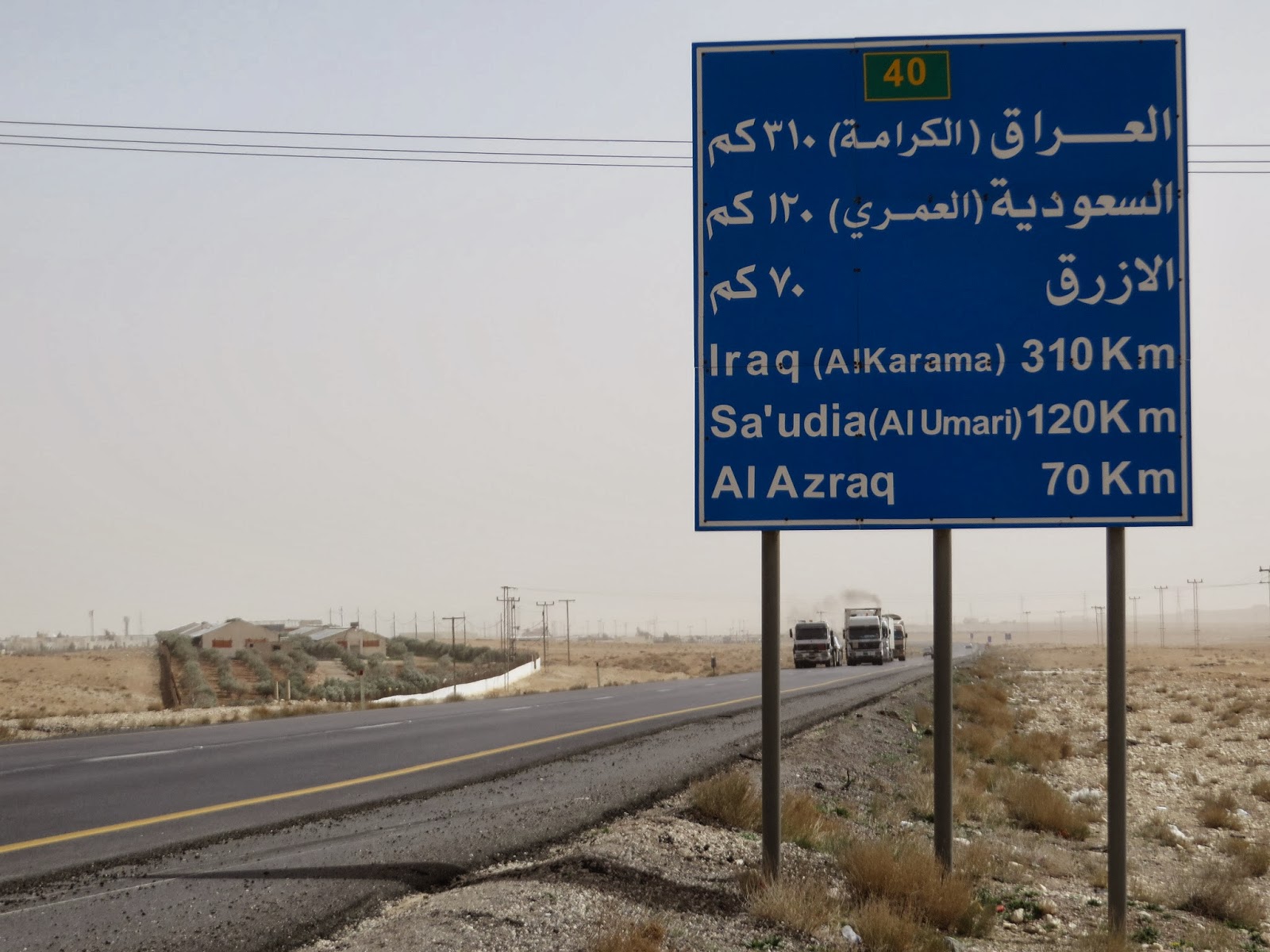
Jordan's neighbours, such alluring locations.

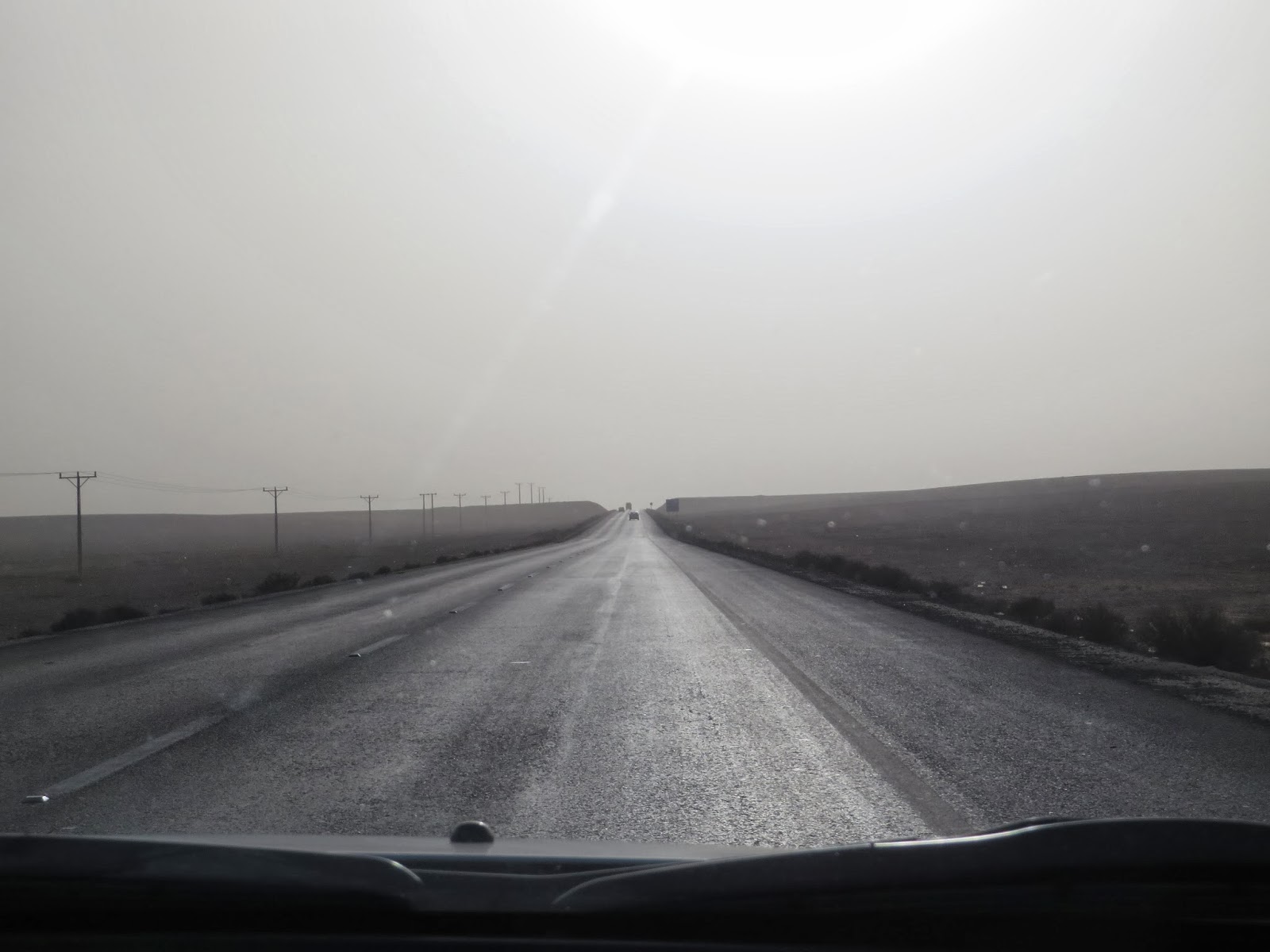
Sometimes in Jordan you can see nothing at all.
 
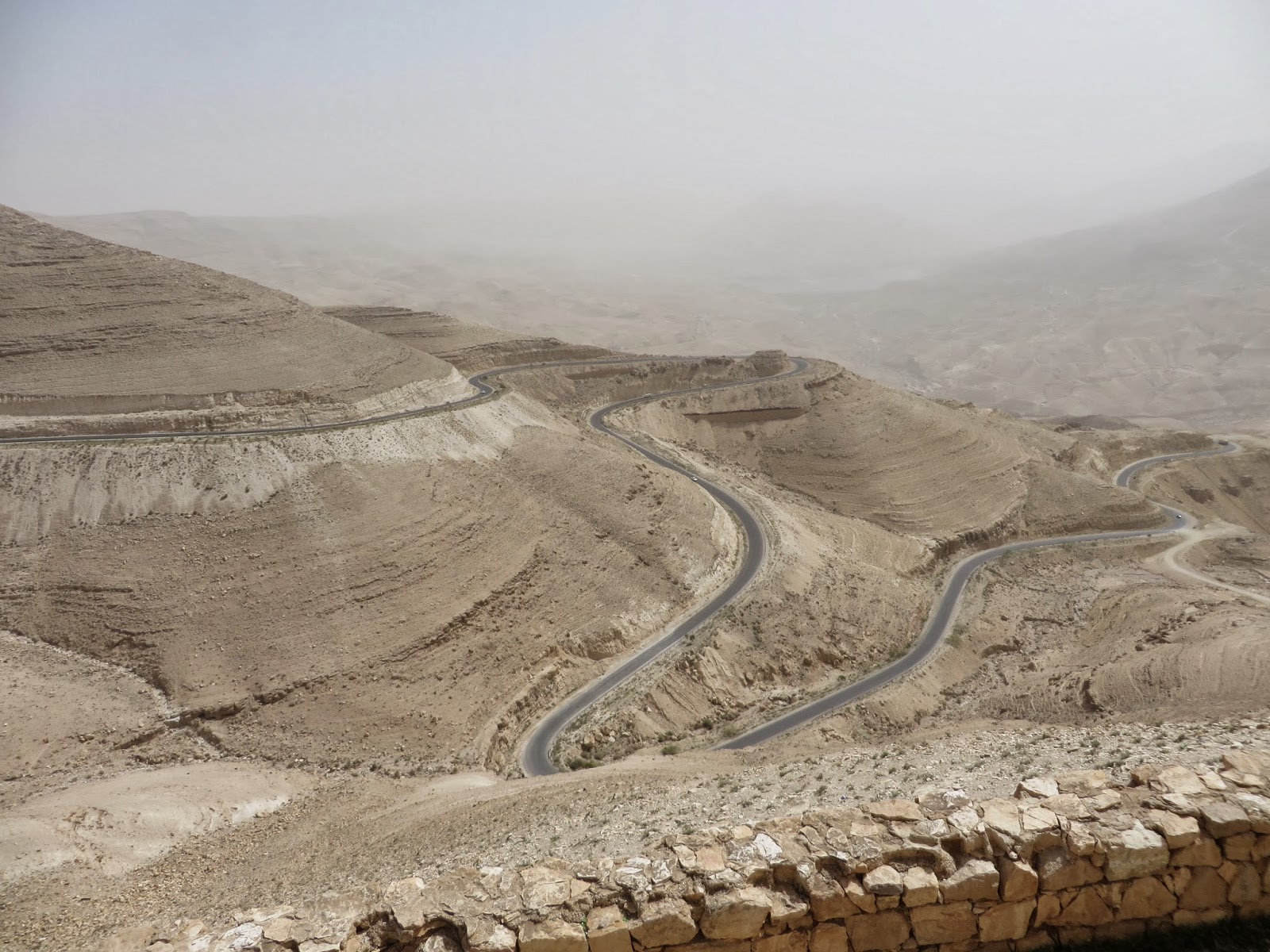
The journey south

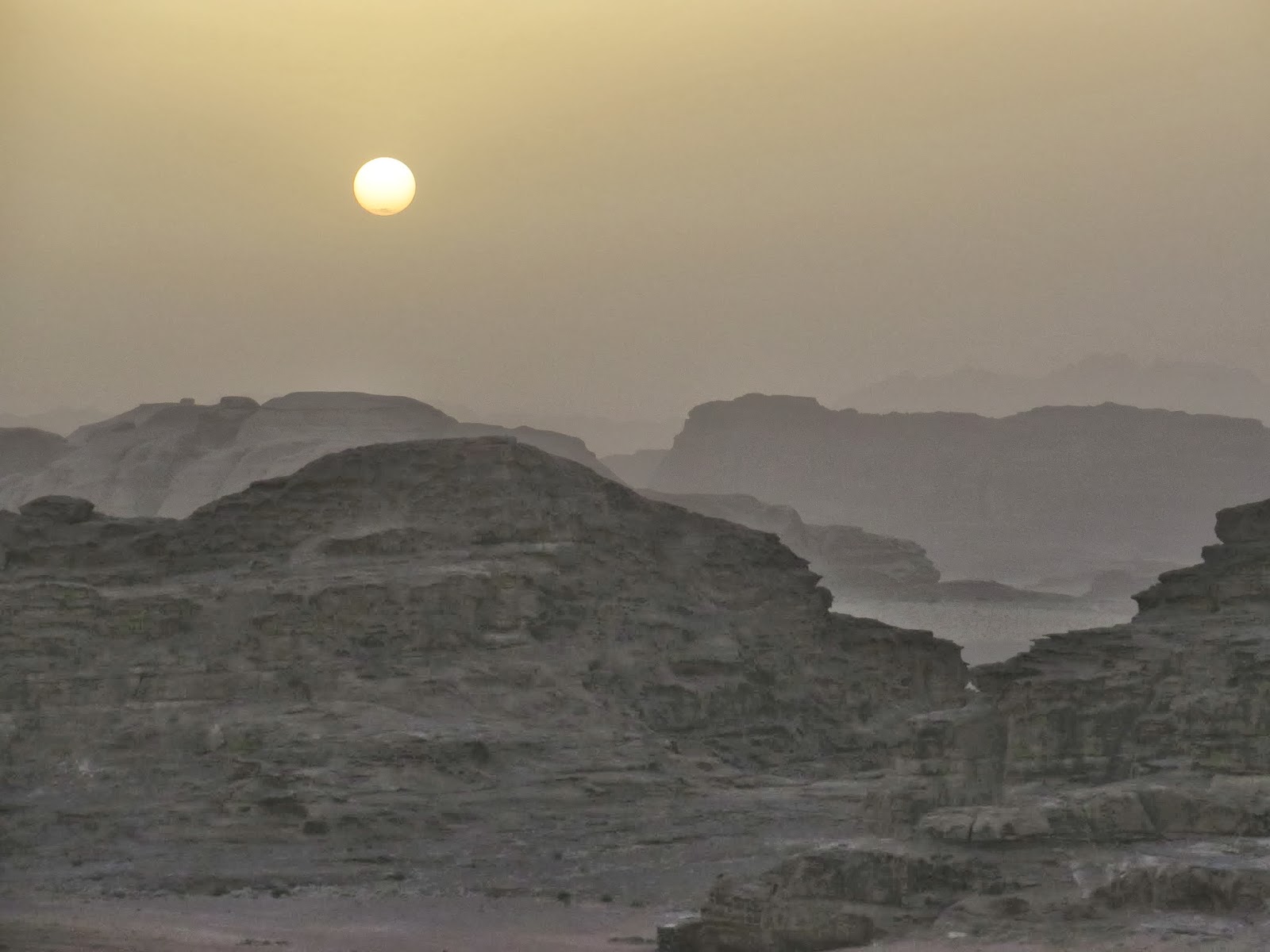
Sunset at Wadi Rum


After a week of touring Jordan (see the upcoming part 2 for details), I reached Aqaba in the south, which crosses into Eilat in Israel. I queued, expecting the worst. One official walked up the line, checking passports and asking questions. He asked me a few questions, looked at a piece of paper, then said I would get my passport back later. I looked around me, everyone else seemed to have had their passports handed back to them. This didn't seem like a good start. I made it through the metal detector (I never fail that one) and waited for my backpack to be checked. I regretted packing a kafia into my bag, probably not a good look. Thankfully the attendant decided my back pack was in the too hard basket, given she had to take everything out in order to search it. At this point I had about three individuals to go, each with their own line of questioning. During this process it was reaffirmed to me how incapable I am at lying. "Have you been in Israel before?" "Yes" Where did you go?" "Oh you know, around. Jerusalem, Bethlehem." "Were you volunteering?" "Ahhhh, yeah." "Where?" "Nablus." "Will you volunteer again?" "Ahhh, maybe." It was around the time I had been waiting on a bench for about an hour for someone to come out and tell me to go back to Jordan that an official handed me my passport. "Where to now," I asked. She pointed to the exit. I was free to go. Things were finally coming up Milhouse. I poured through my passport. Sure enough there was a tourist visa stamp with "3 months" written beside it. I managed to grab a ride for a good price to Jericho and grab a servie back to Nablus on the same day. On entering my flat I was confronted with familiar sewage-like smells emanating from the bathroom, 26 leaks in the ceiling and a chorus of friendly and excited welcomes from the other volunteers. I was home.


Historic ruins played a significant part of my tour of Jordan. It was a wonderful week. 


Friday, 28 February 2014

Outside Nablus

Palestine; some may call it the land of gratuitous tooting. If one is not awoken by the 5am call to prayer, he will be by the sounds of horns blaring as the volume of early morning traffic increases. There are many ways in which the horn is used in Palestine. It is used as a warning to other vehicles and pedestrians that a vehicle is approaching. It is used to express annoyance at a fellow car who has cut you off. It is used to encourage the person in front of you to go faster. It is used if the person in front of you stops in the middle of the road to let passengers off. It is directed toward (I can only assume) Allah when one is locked in a traffic jam. It is used by others when the taxi you are in continually drives on the wrong side of the road to avoid the traffic jams. It is used and sustained for sometimes up to 15 seconds if someone gets in your way. I would estimate that 85% of the time it accomplishes nothing and only winds people up. Hospital beds are laden with taxi drivers suffering from stress related illnesses. Palestinian road rules, or lack thereof, is something I will probably never used to. Nonetheless, if you want to see the country, you must jump into a vehicle and experience the madness once more. I have been fortunate enough to find myself amongst a bunch of avid travelers volunteering in Nablus. Come the weekend (Thursday and Friday for Project Hopers remember, though Friday and Saturday for most in Nablus), it is not uncommon for some kind of trip to be taking place somewhere around the West Bank.

Another trip to Sebastia, this time with my camera.

Hebron is a city at the bottom of the West Bank. It is the location of a few key holy sites, the most significant being a mosque containing the tomb of Abraham/Ibrahim and Sarai (maybe). Right next to the mosque is perhaps the most important synagogue in the West Bank. There was something odd about the presence of a soldier with a gun in the synagogue as people prayed and read the Torah nearby.

Abraham's tomb. RIP.

The site of Abraham's tomb contains one of the most significant mosques and synagogues alongside one another. This is a shot of the synagogue.

Hebron is also somewhat renowned for having settlements in the middle of the city. Usually settlements are in the hills, separated from arab communities. In Hebron, there is a checkpoint in the middle of the city, leading to a central street that contains primarily Jewish settlements. Needless to say, the area has been the site of numerous scuffles over the decades. We visited one Palestinian house located in the middle of the settlements, and it became clear through his stories that living there was close to impossible. Whether it was desperation or an attachment to his home that encouraged him to stay I was not sure. After his sad stories he indicated that he had a range of products for sale in his living room, which resulted in a long and awkward silence amongst the group. What do you say or do when an individual's desperate situation is used to push you into buying something you don't want? The long silence suggested that no one knew the answer to this question.

Check point in the middle of the city

Hebron city

View from the house we visited, complete with IDF neighbours.

New settlements going up mid city.

Palestine couscous is a uniquely chunky variety of couscous. It is called 'muftool' in Arabic, or muftooooooooouull as one shop owner encouraged me to pronounce it. I remember the pronunciation by recalling the cricket commentator from the Playstation game Shane Warne's cricket, who would always pronounce Simon Doull's name 'Doooooouullll'.  "Doooooouullll, steaming in." Muftoooooouull. Last week a few of us visited the fair trade factory just north of Nablus in Burqin. I had been buying Palestine couscous, or political couscous as I liked to call it, for a number of years, so it was great to go see the factory where it was being made. The visit was one of the more encouraging stories I have heard while in Palestine. 10 years ago, during the intifada, farmers around Nablus were being paid incredibly low sums for their produce (mainly couscous and olives). One individual, i forget his name, started a fair trade initiative in Palestine, a co-op that now includes around 1000 farmers and a well-organised production and export factory. In fact, it was the most organised thing I have witnessed while in Palestine. You can find the products such as couscous, olive oil, soap etc in your local stores. It may be a little bit extra, but it gives the farmers here a much better deal. The produce also has to be driven to the Israeli/West Bank border, unloaded, put into another truck, and driven on. The practical joys of occupation. So, the extra gold coin in cost is understandable. That's the end of my sales pitch. Read more here: http://www.canaanfairtrade.com/burqin.php


Another location I have found really encouraging is the freedom theater in Jenin, a town about 1 hour drive from Nablus. Recently the project hope crew was fortunate enough to meet a member of the PA here. I asked him what Palestinian people could do as a form of resistance, given he promoted non-violence and political peace talks had been ineffective for half a century. His answer, like all his answers, evaded the question somewhat, and the only point I could decipher was that Palestinians should stay in Palestine, which I did not find particularly enlightening. Perhaps they could do something while they wait? Maybe I am not being fair, but I felt like his answer reflected the lack of creative responses to the occupation throughout Palestine. Freedom theatre (along with canaan fair trade to some extent), is an example of creative resistance. The theatre has a school where students can learn to think critically and express their political frustration through drama. It has a full course which students can enroll in to study over the course of a few years, and it also runs youth programs. Productions take place in the theatre each week, and they are often taken on the road and performed around the world.There is, of course, an abundance of creativity in the youth of Palestine, but not many opportunities to express it. Schools are largely parroting institutions, where one learns by rote what the teacher says. The number one complaint I have heard from University students in Nablus is that the school system fails to teach them the intellectual skills they need. I hope there is a cultural revolution in Palestine, and youth are encouraged to think critically and creatively. I hope that this in turn leads to creative resistance, rather than violence or inactivity, which are the two options that seem to exist today. Initiatives like the Freedom Theatre offer me hope, and its therefore no wonder that they receive such a hard time from the IDF. I encourage you to read about them here: http://www.thefreedomtheatre.org/


Inside the theatre.


Next week I head into Jordan to look around and meditate in the desert. I have a meditation attention span of about 10 seconds, but hopefully the sand will help.


Friday, 21 February 2014

Inside Nablus

Nablus is a hustling and bustling city of just over 100,000 people. It has two large cliffs on either side of the city which help one's initial orientation significantly.I have slowly found my bearings over the past three weeks in the city. My day often begins with the call to prayer at 5am, which more often than not wakes me up. The volume of the call far outweighs the quality of the speakers used, making it a harsh start to the day. In many ways, the call to prayer represents the religious atmosphere of Nablus. Everyone is a Muslim, there is no concept of not participating in the religion of the culture. Sure, you may get the odd person who is of another religion, but everyone has a religion. Religion is a communal activity, not a choice the individual opts into. The call to prayer is a message to the entire population that it is time for prayer (though some (many?) no doubt go back to sleep in the privacy of their own homes rather than get up).


Felafel sandwiches are 3 shekels here - about $1 NZ, making lunch very easy and very oily. From Saturday to Wednesday I teach, and Thursday and Friday is the weekend. The result of this is that I never know what day it is. Two days a week myself and another volunteer catch a servie (taxi van) to a neighbouring town to teach at a primary school there. Teaching 35 five year olds who don't speak any English is just about as challenging as teaching teenage girls. The principal in Tubas is a well traveled and educated individual who cares passionately about the school and has lost all faith in Palestinian politics. He is great to talk to. Another two days a week a few of us head into the universities to initiate conversations in English with those seeking to improve their speaking skills. This is a highlight, as many of the students have an insightful and thoughtful perspective on Palestine and the world (though most think New Zealand is in Europe somewhere). Although one can run out of things to talk about over the course of a 2 or 3 hour conversation, I have learnt a great deal about Palestinian culture and the thinking patterns of Palestinians. In the afternoons I teach beginner adult classes at 2 hour lessons a pop. I have met a few interesting characters in these classes, and I can't work out whether this is due to cultural differences, or they are just universally strange.Learning how to teach English has been a challenge, but in general people have been very patient and interested in learning. Being patient with my kiwi accent is also a struggle for many, but I am trying hard to pronounce my r's and vowels correctly.

View of Nablus from Project Hope office


The cultural attitude toward foreigners is variable. Many in Nablus are extremely friendly and welcoming, and I have been to dinner at a few homes now. People are often fascinated to know where you have come from, why you are here, and what you think of Palestinians. "Do you think we are all terrorists back home" is a common question I get. I guess that's the way they understand their image to be overseas, which probably does not do a great deal of good to the self-esteem of a nation. Others, fewer in number, seem less welcoming of foreigners, probably wondering what on earth you are doing here and suspicious of your links with Israel. I think it is harder to be a female tourist here, as you generate a lot more attention. I am yet to walk through the streets in indistinguishable drag, but I have walked with other female volunteers which has led me to this conclusion. It was interesting spending time at a local's house recently when he asked one of the female volunteers whether she had had any unfavourable attention from the males while in Nablus. When she replied that she had on occasions, one could see his disappointment and annoyance. It is not part of the culture to be rude to women, but there are always a few bad eggs in any country. Overall, there have been times when I have simply wanted a middle ground of indifference; the west tends to ignore everybody rather than welcoming or leering at them. But maybe the numerous experiences of friendliness makes the leering worth while.      

Some local street graffiti.
Nablus is a beautiful place, but I have struggled with the waste system here, perhaps because there is no waste system here. I cannot work out if this is due to occupation, which has disabled Palestine from caring for their own land, or if it is because of the culture of the place. Rubbish litters the streets and countryside, and it is a sorry sight. There is plenty of agriculture, and Palestinians seem quite in touch with the land. Many, too, appreciate the beauty of their land. It is strange, then, that more concern is not placed in preserving this nature and reducing waste and environmental impact. In fact, I believe an organised drive to clean up and care for the land is one of the better acts of resistance that Palestinians could do. I was bold enough to raise the point in the university, and was met with a series of responses bemoaning peoples attitude toward littering. I guess many locals feel the same way. I just wonder if anything will change though. There are many good ideas in Palestine, but sometimes action and organisation is greatly lacking. I've met many environmental engineering students here, I hope they get together and change Palestine's future before it becomes a rubbish dump.

I was asked to give a talk about New Zealand at the university next Wednesday. The university also suggested I make a flyer to promote the event. I couldn't resist the opportunity...


Interested in learning more about 
New Zealand?

Then come to a one time only talk from one of Nablus’ most accessible New Zealand citizens.   

When: Wednesday 27th February
Where:  An-Najah University: Languages Department.


New Zealand: It may be famous for The Lord of the Rings, kiwifruit, and being close to Australia, but there is so much more…


Friday, 14 February 2014

Kafr Qaddum

For over 2 years now, every Friday, a small group of people gather to protest in the small village of Kafr Qaddum. One of the ways that settlements impact on Palestinians is that they often divide and isolate small communities. In Kafr Qaddum's case, the direct road from the village to the city of Nablus was restricted to settler use only, meaning that the locals had to drive an extra 14km around the settlement every time they wanted to go to Nablus. This is not only impractical for locals, but perilous should an ambulance be urgently needed in the village. And so, locals gather to protest every Friday after mosque.

Early stages of the protest, in which tires are burnt to, hmmm, produce dark smoke?

Rock throwing has long been a classic image of Palestinian resistance. Many see it as an expression of resistance by a people who are being significantly out-muscled. It is a pastime that is particularly popular amongst the youth of Palestine. When I arrived at Kafr Qaddum, then, I was not surprised to find a small group of young children at the front burning tires and throwing rocks at soldiers close by. For a while I wondered if this was it - a small group of kids throwing rocks at soldiers who, most likely, had absolutely no desire to be there at all.  As the afternoon progressed, however, a large group of adult men emerged from the mosque down the road to participate in the protest. The strategy seemed simple; march up the road chanting slogans, get tear gassed once you get too close to the soldiers, and run back again coughing and spluttering. Repeat ten or twenty times. This was, of course, far too boring for the teenagers, who sought to sneak up the banks alongside the road to get a better shot at soldiers with their stones. I can only imagine this was quite a thrill for the teenage boys, who probably dreamed all week of throwing that perfect shot.

I do not really know where to begin in articulating the problems I had with this protest. Let me start with the stone throwing. I can understand how one might defend the action as a humble means of resistance in the face of overwhelming odds. My problem with it is threefold; number one, it is obviously largely ineffective. Most of the stones fell well short of the soldiers, and the very rare accurate shot would hardly inflict much damage. Number two, it legitimates any use of force by the IDF. It is much easier to defend the use of tear gas and aggression by the IDF if it is in response to violence and aggression. Third, and most importantly in my mind, it incites hatred and aggression in the minds of young Palestinian children. While understandable, such hatred is not helpful for creating a better future.


Then there is the risk of turning media attention into dubious propaganda. Before I attended the protest I was told that the IDF had injured innocent people at protests, going so far as to teargas a 2 year old girl. The reality was quite different. If you take a 2 year old girl into such a protest and stand next to a bunch of kids throwing rocks, of course your daughter is going to get hurt. Such a result says just as much about the organisation and tactics of the protest as it does the actions of the IDF. I felt myself quite sickened as I witnessed a bunch of press snapping close ups of a young boy balling his eyes out after tripping over while running away from tear gas. Such shots are simply being dishonest if they are used to emphasise the violence of the IDF and promote the innocence of the Palestinians. They therefore diminish the integrity of the argument for Palestine. Since getting here I've heard many things about the evils of Israel that I cannot help but be suspicious about. It's not that they are necessarily untrue; many are half-truths - events retold with significant bias. Of course, I've also read some incredible Israeli propaganda. In fact, it seems hard to trust anyone.


I could not help but think of Martin Luther King as I witnessed this farce. He rightly saw that moral argument was the black communities best weapon, and that only non-violence would sustain that weapon. Any retaliation or act of violence would make void any moral claim of injustice. The protests he organised had to be non-violent to be effective. They were also well-organised - people stuck together and had a specific goal, whether it be marching to a specific location or creating boycotts that would have a crippling effect. Here too, the moral argument is the best weapon the Palestinians have, far more powerful than rocks.

I can now see why Robert Fisk described the confrontation between armed Israeli soldiers and young Palestinian children as one of the more depressing scenes of his journalism career. The scene seemed hopelessly pointless to me, and rather than addressing injustice it merely encouraged hatred on both sides. I imagine the youth felt pretty tough after throwing stones and getting tear gassed. I also imagine their actions had more to do with feeling tough than they did confronting the injustice of being barred from using a main road so important for the community. In fact, the whole thing felt more like a macho fest on both sides than it did a legitimate protest. Again, King rightly saw that the mindset behind the protests was as important as the actions of the protests themselves. If the actions inspire hatred or a feeling of superiority amidst the protesters, all hope was lost. Non-violence is not just refraining from the desire to be violent, but having no desire to be violent in the first place.

Just to the left of the protest this little farce was taking place. God knows what those teenagers were trying to achieve other than a delusional feeling of courage. 

I believe it is not right that the people of Kafr Qaddum may not use the main road to Nablus. I also know that similar cases of injustice happen all over the West Bank, and that each symbolises the unjust nature of the occupation. But until protests become well-organised, purposeful and non-violent I have no desire to participate. Encouraging females to join wouldn't hurt either.